

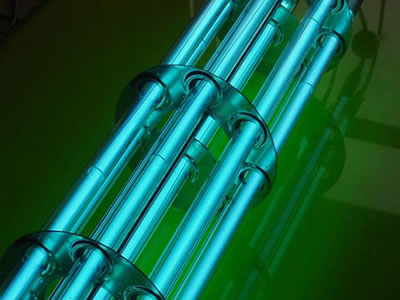
 American Ultraviolet's UV-C in-line liquid disinfection systems treat flowing liquid directly, using thin-film and non-contact technology to reach ingredient water, liquid sugar, and other liquids not traditionally treatable with standard UV-C water units. All food and beverage in-line liquid treatment applications are engineered and sized on a case-by-case basis to fit the specific requirements of the application.
Thin-Film and Non-Contact Treatment
In-line disinfection systems are the UV-C treatment option for liquid that's actively flowing through a facility, rather than sitting in tank headspace. By locating UV-C lamps very close together around the flow path, these systems treat the liquid directly instead of relying on how well light passes through it, which makes it possible to disinfect liquids that are nearly opaque to UV.
Water disinfection systems meet, at minimum, the EPA-required dose of 40,000 microwatts per square centimeter, and systems serve applications ranging from 0.5 GPM to millions of gallons per day. Consult your authorized American Ultraviolet representative for proper sizing.
Looking for tank headspace disinfection instead? See our Liquid Storage Tanks page.
20-Lamp Vessel for Low-Transmission Liquid
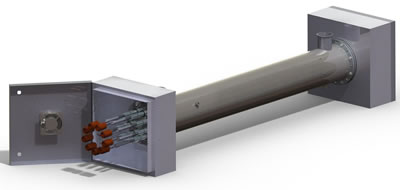
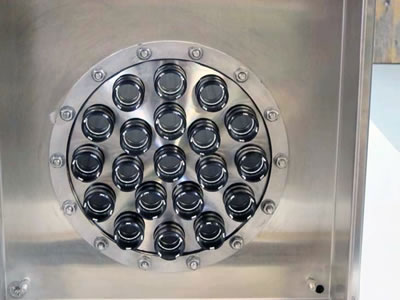 In one custom application, 20 High Output UV-C lamps were grouped into a 6" diameter vessel to treat liquid sugar, a liquid that's nearly opaque to UV-C. Because liquid sugar must stay hot to remain liquid, cooling shrouds were engineered at both ends of the vessel to keep the lamps within their operating temperature range, since the flowing liquid alone couldn't cool them as clear water typically does.
SAGE V Thin-Film Vessel
A thin-film vessel was installed to treat 100 GPM of liquid sugar, with an electrical enclosure featuring an LED indicator light for each lamp, allowing operators to monitor lamp status at a glance.
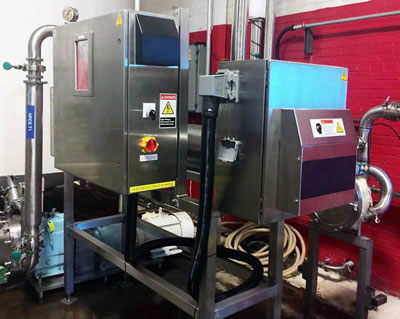
Installation of a thin-film vessel to 100GPM of liquid sugar.
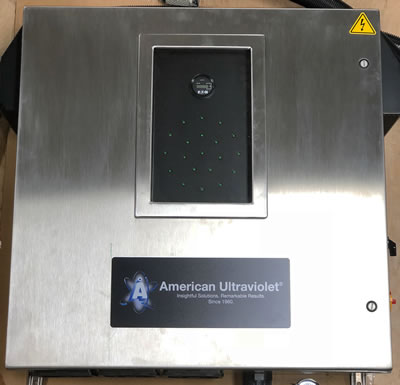
Electrical enclosure with an LED indicator light for each lamp.
Custom UV-C Liquid Disinfection Solution
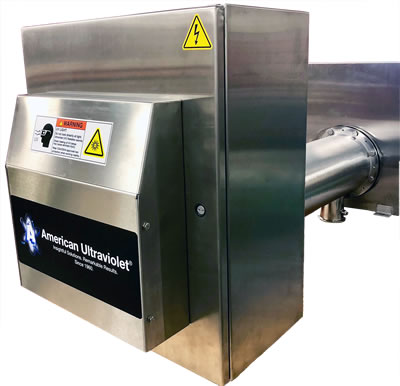
Built for a water source susceptible to contamination, this system delivers a high UV-C dosage through high-temperature, low-transmission liquid — treating water with a UV-C transmission of 90% at temperatures up to 190°F and a peak flow rate of 160 GPM. Cooling shrouds keep the high-intensity Amalgam lamps within their operating range.
Product line:
UVC Inline Liquids
Trusted by
 American Beverage Association members and leading food and beverage manufacturers rely on American Ultraviolet for tank disinfection and microbial reduction, including Coca-Cola Bottling, Pepsi Cola, M&M/Mars, Heinz Co., Dr. Pepper/7-Up, Minute Maid, Hershey's, Sealtest Foods, Ralston Purina Co., Molson Lion Brewery, Kraft, Dupont, Seagram & Sons, the U.S. Food & Drug Administration, Morningstar Foods, Anheuser-Busch, Guinness Brewing, Domino Sugar, National Starch, Mott's Juice, and Caribe America Trading Company.
UV-C In-Line Liquid Disinfection Systems FAQ
What is UV-C In-Line Liquid Disinfection?
UV-C in-line disinfection treats liquid as it flows through a facility, rather than treating the tank headspace air. Systems use UV-C lamps positioned around the flow path to disinfect the liquid directly, meeting at minimum the EPA-required dose of 40,000 microwatts per square centimeter for water.
Can UV-C Treat Opaque Liquids, like Liquid Sugar?
Yes. Liquids that are nearly opaque to UV-C can still be treated in-line by grouping lamps very close together around the flow path. This lets the system treat the liquid directly rather than relying on how far UV-C light can pass through it, as is typically done for clear water.
Why Do High-Temperature Liquids Like Liquid Sugar Need Special Cooling for In-line Treatment?
Liquid sugar must stay hot to remain in liquid form, so it can't cool the UV-C lamps the way flowing water normally does. Custom cooling shrouds are engineered into the vessel ends to keep the lamps within their specified operating temperature in these applications.
How are In-Line UV-C Systems Sized for a Specific Application?
All food and beverage in-line liquid treatment applications are engineered and sized on a case-by-case basis. Systems can be built to fit flow rates from 0.5 GPM up to millions of gallons per day, so it's best to consult an authorized American Ultraviolet representative for proper sizing.
What's the Difference Between In-line Disinfection and Tank Headspace Disinfection?
In-line disinfection treats liquid as it flows through a facility, using UV-C lamps positioned around the flow path to treat the liquid directly. Tank headspace disinfection works differently: UV-C conditioners like the LTC, BT, and SC series treat incoming air before it reaches the space above stored liquid, while internally mounted fixtures like STG and TTG are installed inside the tank itself, with TTG also treating the liquid via a partially submerged lamp.
American Ultraviolet equipment is manufactured entirely in the USA.
Prolonged, direct exposure to UV-C light can cause temporary skin redness and eye irritation. American Ultraviolet systems are designed with safety in mind and, when properly installed by a professional contractor, do not allow exposure to UV radiation, allowing for safe operation and maintenance.